The Fantasy First-Chapter Blueprint
Your first chapter is your one shot to hook an agent or a reader. Don't let the 7 deadliest mistakes land your manuscript in the rejection pile. This free 7-day email course gives you the step-by-step blueprint to avoid them and craft an irresistible opening.

Your Novel Matters ...
Looking for the right book coach for your fantasy novel?
Are you a fantasy writer …
… struggling to convert the vivid scenes of your fantasy novel from your imagination to the page?
… stuck in a loop where you constantly rewrite your opening pages?
… worried your story won’t resonate with your readers?
What if I could show you the exact steps week to week that would take you from brainstorming and drafting to revising and publication?
I specialize in developmental editing and book coaching for writers of fantasy novels—writers who value the craft of storytelling and wish to create stories that resonate.
My Services
Develop Your Ideas
Fantasy Footsteps: Road to Publication
I’ll let you in on a secret. All you need to succeed as a writer are three things:
A Roadmap: Illuminate your path with a step-by-step guide, ensuring you achieve your writing goals every week. From outlining to publishing, every stage of your journey is mapped out for success.
Mindset Mastery: Learn how your thoughts control your outcomes in your writing. Overcome self-doubt and unearth the confidence that will bring your unique ideas to life on the page.
Personalized Support: Prepare for comprehensive assistance, real-time accountability, and feedback tailored to your needs. From brainstorming sessions to final publication, you'll have a dedicated ally guiding you every step of the way.
With these three pillars, you'll unlock the potential to:
Craft a captivating story that enthralls readers from the first page to the last.
Develop complex characters and immersive worlds that resonate deeply with your audience.
Navigate the complexities of plot twists and pacing, keeping readers hooked until the final chapter.
Receive specific guidance on refining your scenes so that readers root for your protagonist.
Overcome writer's block and stay motivated throughout your writing journey, ensuring consistent progress.
Transform your rough draft into a polished, professional manuscript ready for publication.
Are you ready to turn your fantasy novel from a mere vision into a masterpiece that captures hearts and minds?
Join Fantasy Footsteps: Road to Publication and begin your author journey with everything you need to write a story that works.
Don't let your story remain trapped in your mind—bring it to life with me!
If you’re thinking, “Yes, please! Tell me what to do!” , I’d like to invite you to work one-to-one with me to finish your novel and write a story that works. Join my book coaching program designed specifically for fantasy writers—Fantasy Footsteps: Road to Publication.

Discover Helpful Tools
Resources For Writers
Here you will find some of my favorite resources for writers.
Add these books, podcasts, websites, and other resources to your writing toolbox to augment your writing at any stage.
Join My Free, Private Facebook Group
Finish My Fantasy Novel: Write & Revise My Best Book in 6 Months
In the group, I go live weekly with writing tips. The group is also a platform for writers to support each other and share their wins and progress.
Live training schedule:
1st Tuesday of the month: Free critique for someone in the group!
2nd Tuesday of the month: Writing sprint with fellow writers
3rd Tuesday of the month: Live training on a specific topic
4th Tuesday of the month: Interview with an author or marketing/business expert


Improve Your Craft
Writing Advice Blog
As a developmental editor and book coach, everything I post is designed to help you build your creativity, strengthen your prose, and explore new avenues in your writing. The opinions in each post are my own, but many are inspired by ideas from established authors and editors who excel in their fields.
Rely on my blog for clear and specific writing advice, motivational tips and grammatical aid, and interviews with experts!
Hi! I'm Nicole.
I’m a Developmental
Editor & Book Coach for Fantasy Writers.
Like you, I'm a writer. I understand the mental and emotional ups and downs of storytelling. Don't let resistance win! Recognize the value of good advice plus hard work.
My approach to novel writing is multifaceted. For a deeper understanding of my process and style, take a look at some of my favorite craft-of-writing books in my Resources section.
What can I say about myself? I read, I write, I read about writing, and I write about reading. It never gets old to me.

See what writers like you are saying . . .

Nadir Shirazi
“I’ve been stalling on my Islam-inspired sci-fantasy series for 10 years. But within 10 minutes of starting Nicole’s program, I started writing again."

Amanda Emerick
“I can’t recommend Fantasy Footsteps enough to writers who are legitimately looking to polish their craft, write, and eventually publish their novel."

Trinity Cunningham
“I loved discussing my story with Nicole. She provided me with invaluable insights I never would have considered on my own."
Latest on the Blog

You will find no pictures of kittens here. No images of favorite dessert recipes, snapshots of my recent vacations, videos of puppies playing the piano (although I do love dogs), or YouTube clips of monkeys stealing people’s sunglasses.
I’m genuinely sorry if that disappoints you.
Instead, you can rely on my blog for clear and specific writing advice, motivational tips, grammatical aid, and author/editor interviews.
As a developmental editor & book coach, everything I post is designed to help you build your creativity, strengthen your prose, and explore new avenues in your writing. The opinions in each post are my own, but many are inspired by ideas from established authors and editors who excel in their fields.
Some of these tips might be just what you need to hear. Others might not work for you personally, and that’s okay.
Apply the tips that fit your personality and writing habits, and feel free to adapt or ignore the others. For further questions and comments, you can email me or reach me through my Contact page.
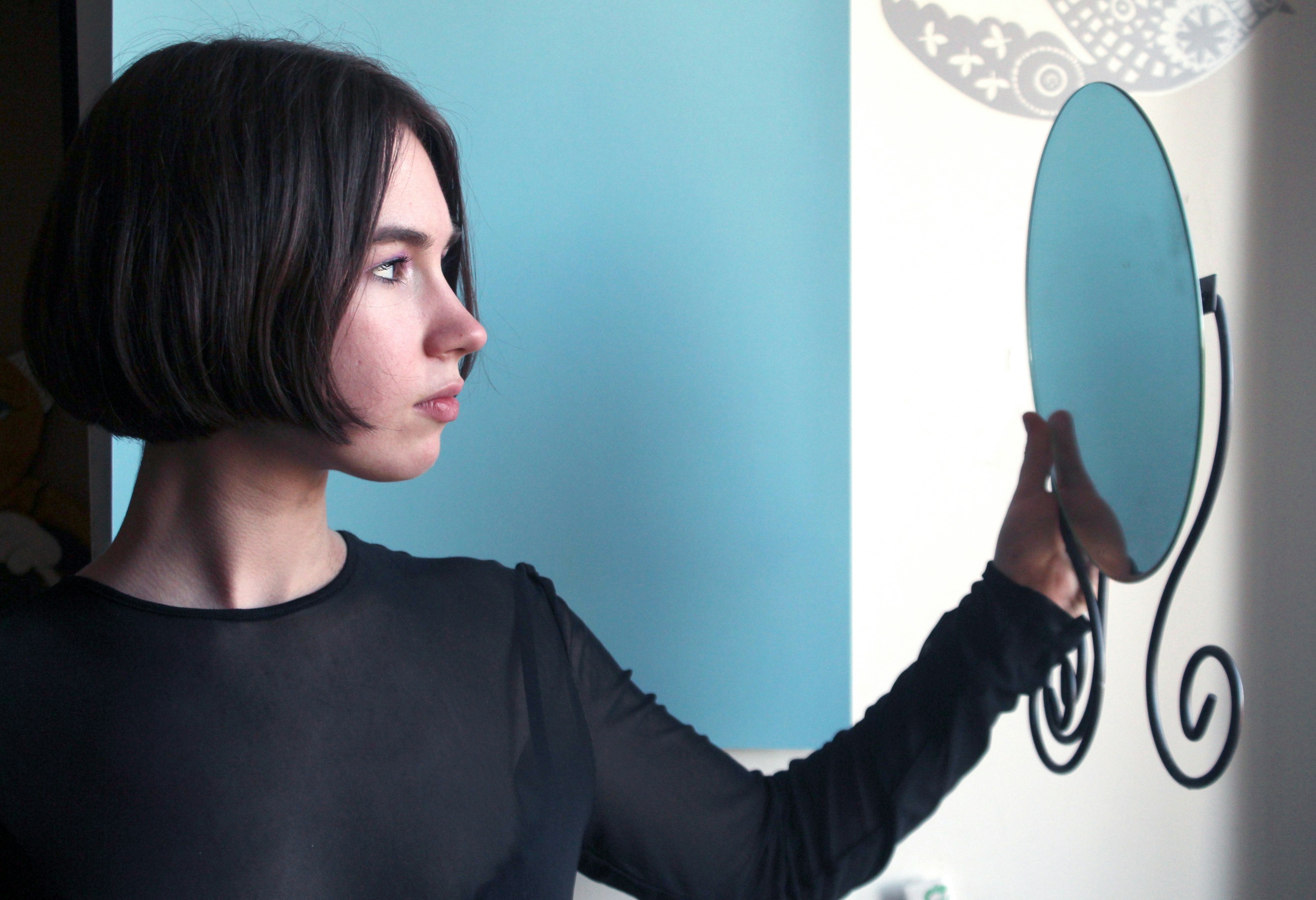
7 Ways to Describe Your Protagonist without Using the Mirror Cliché
Discover in this post …
how to tell when a mirror description works—and when it feels cliché.
how to make physical description feel natural within your character’s point of view.
how to use seven different tactics to reveal your protagonist’s appearance without relying on a mirror.
Mirror, Mirror, on the Wall
As a reader, you’ve likely seen it—somewhere in Chapter 1, the protagonist looks in a mirror. (It's not always a mirror, per se. It can be a reflection in a clear pool or something along those lines, but it serves the same purpose.) The protagonist describes their appearance, easily conveying their physical traits so that readers can visualize them.
This can be done well or poorly. For example, if the writer thinks, “How can I help readers picture my character? Aha! A mirror, how convenient! Problem solved!” … well … the writer may have missed an opportunity to characterize their protagonist on a deeper level. Also, they might not know that the “mirror trick” has been done so often that it’s now widely considered cliché.
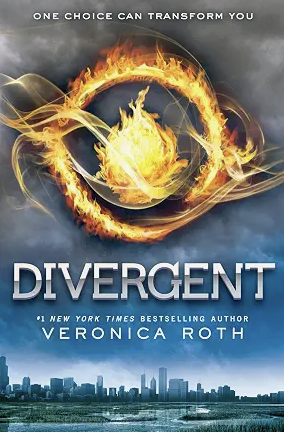
On the other hand, author Veronica Roth uses a mirror brilliantly in Divergent. The protagonist, Beatrice, lives in a faction where vanity is discouraged. Her family owns a single mirror, and they bring it out only once every three months when her mother cuts her hair.
Chapter 1 shows Beatrice standing in front of the mirror during her haircut:
“I sneak a look at my reflection when she isn’t paying attention—not for the sake of vanity, but out of curiosity.”
See how effortlessly Roth uses the mirror to provide some important worldbuilding (the way Beatrice’s faction shies away from self-focus) and to give readers information about something the character is actively wondering about (how much she has physically changed in the past few months)?
That’s where many writers make a mistake. They use the mirror only to reveal their character’s physical traits. But if a mirror says something important about your character’s world, or if there’s a specific reason your character is thinking about their looks in your opening scene, it can sometimes work.
The other day a client of mine told me, “Nicole, I know you said there are other ways to give a physical description of my character without using a mirror, but what are those ways?”
And I realized I’d read enough excellent examples to put this post together and help inspire writers as they address this exact question.
Below are seven different tactics (not an exhaustive list, just a few ways to get you thinking!) to help you convey your protagonist’s physical characteristics to readers without relying on the mirror cliché.
Disclaimers & Notes
Remember—just as you saw in the Divergent example above, the most important guideline underlying everything I’m about to say is this:
If you’re writing from a deep point of view (meaning you want to close the distance between readers and your main character so that readers are essentially “becoming” your character as they read), your protagonist should have a natural reason to notice the physical traits as you relay them to readers.
The deeper the point of view, the more important the guideline above becomes. For example, Christopher Paolini doesn’t write from an incredibly deep point of view in Eragon when he comes out and tells readers his protagonist’s physical traits:
“Dark eyebrows rested above his intense brown eyes. His clothes were worn from work.”
In a deep point of view, this wouldn’t make sense from Eragon’s perspective because he can’t see his own eyebrows or eyes at this moment, nor is he analyzing himself (he’s not looking in a mirror in this excerpt). It’s fine that Paolini did this because his chosen point of view is third-person limited with flexible narrative distance. But if you’re trying to get into your protagonist’s head and help readers understand them on the deepest possible level (very popular nowadays because of the incredible potential for emotional resonance), you may find the strategies below quite helpful.
Some readers like their main characters thoroughly described, and others prefer a lighter touch so that they can imagine them on their own. This post is not intended to convince you that you need to describe your protagonist in detail. Maybe your character is like Ender from Ender’s Game. Orson Scott Card focuses more on Ender’s size and vulnerability than his facial structure and eye/hair color, and this works well for the story. But for those of you who want to describe your character to readers and are simply wondering how to do this without relying on a mirror, I hope you enjoy exploring the seven ways below!
Tactic 1 - Have your character compare their appearance to someone else’s.
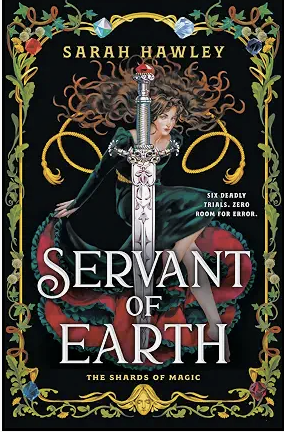
As humans, we’re constantly comparing ourselves to others, so it’s natural that interacting with another character might make your protagonist think about their own physical traits. Here’s an example from Servant of Earth by Sarah Hawley, written in first person, where the point-of-view character, Kenna, can’t help but see herself as less attractive when her friend Anya is around:
I grinned at the familiar voice and turned to see Anya rushing towards me, dimples flashing. She started to hold out her arms, then stopped a few feet away, eyeing my mud-stained clothes….
Anya always looked beautiful, with her cascading golden-brown hair and large hazel eyes. She was tall and curvy, the kind of woman people couldn’t help gawking at. In comparison, I was short, thin, and usually covered in mud. “A little wild” was what some of the kinder village women called me; “half feral” was more common. Why Anya had taken one look at me when we were children and decided we’d be best friends, I’d never know, but I was eternally grateful.
Since Anya is physically present on the page, interacting with Kenna in real time, it makes sense for Kenna to notice how her friend’s physical appearance sharply contrasts her own. It also shows readers how Kenna views herself—her sense of self-worth is low, leaving plenty of room for her to gain confidence throughout the story.
Tactic 2 - Let another character notice or comment.
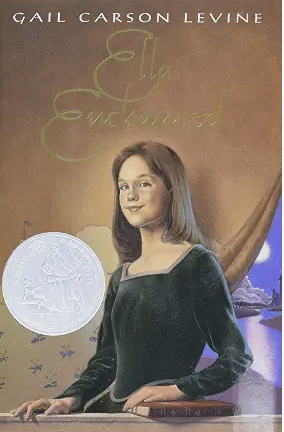
Characters might not always be consciously thinking about their own physical traits—but someone else might be doing so for their own reasons. It’s worth considering whether this strategy might fit naturally into your story.
In Chapter 4 of Gail Carson Levine’s Ella Enchanted, Ella’s father sits down with his daughter. He’s a merchant who travels a great deal, and he doesn’t get many opportunities to spend time with Ella:
He looked me over. “That’s my chin.” He touched it, and I drew back. “Strong. Determined. That’s my nose. I hope you don’t mind that the nostrils flare. My eyes, except yours are green. Most of your face belongs to me. I wonder how it will be on a woman when you grow up.”
Ella’s interaction with her father is awkward, and she dislikes the way he’s studying her as if he would study a portrait or an object, not his own flesh and blood. But readers gain a strong sense of two things: 1) Ella’s stubborn and spirited personality and 2) a partial image of Ella’s face.
Tactic 3 - Connect description to an emotional wound.
On a slightly different note from the Divergent example above, beauty might tie into not just the worldbuilding but also the protagonist’s character arc and painful self-beliefs. Here’s how the character Aza describes herself in Gail Carson Levine’s Fairest:
I was an unsightly child. My skin was the weak blue-white of skimmed milk, which wouldn’t have been so bad if my hair had been blond and my lips pale pink. But my lips were as red as a dragon’s tongue and my hair as black as an old frying pan.
… If anything, I became uglier. I grew large boned and awkward. My
chubby cheeks were fine for a babe, but not for an older child. I resembled a snow maid, with a big sphere of a face and round button eyes.
Mother said fairy godmothers only watch from afar and sympathize. I didn’t see the good of a hand-wringing fairy godmother. I needed one who’d fly in and help.
With no hope for fairy interventions, I wished for a magic spell to make me pretty…. We Ayorthaians are sensitive to beauty, more sensitive than the subjects in other kingdoms, I think. We love a fine voice especially, but we also admire a rosy sunset, a sweet scent, a fetching face. And when we’re not pleased, we’re displeased.
I developed the habit of holding my hand in front of my face when guests arrived, a foolish practice, because it raised curiosity and concealed little.
Mother and Father mostly gave me chores that kept me out of sight, helping the laundress or washing dishes. They did so to protect me. But it was common sense, too. I was bad for business.
Notice that because Aza spends a good amount of time thinking about her lack of beauty, it makes sense to include this in her internal narration. Her words come across naturally because everyone around her has convinced her she’s ugly, and she feels the effects of that belief. In the end, it’s not about Aza changing her appearance and suddenly becoming beautiful (because she genuinely doesn’t fit into traditional Ayorthian beauty standards). It’s about her changing how she perceives herself.
If beauty ties directly to your character’s arc, don’t be afraid to spell out your character’s perspective of their own image on the page so that readers can see how that perception changes over time.
Tactic 4 - Use imagination or metaphor to describe your character.
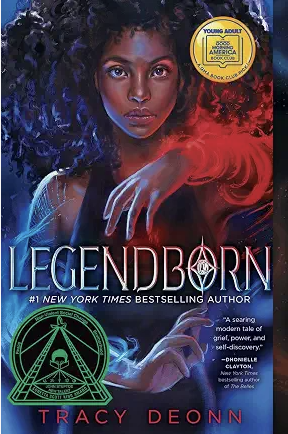
This was the most creative example I came across as I perused books for examples of how authors describe their protagonist without a mirror. In Legendborn by Tracy Deonn, the protagonist’s mother dies (not a spoiler! This happens on page 1), and the protagonist, Bree, must come to terms with life without her. She thinks of herself in terms of “Before-Bree” and “After-Bree”:
In my mind’s eye, After-Bree looks almost like me. Tall, athletic, warm brown skin, broader-than-I-want shoulders. But where my dark, tight curls are usually pulled up on top of my head, After-Bree’s stretch wide and loose like a live oak tree. Where my eyes are brown, hers are the dark ochre, crimson, and obsidian of molten iron in a furnace, because After-Bree is in a constant state of near explosion. The worst is at night, when she presses against my skin from the inside and the pain is unbearable. We whisper together, I’m sorry, Mom. This is all my fault. She lives and breathes inside my chest, one heartbeat behind my own life and breath, like an angry echo.
Containing her is a full-time job.
Just as in the Fairest example above, the character description here is tied to an emotional wound—and this time, it goes even further because the protagonist thinks of herself as different “versions” as she processes the pain. If your character has experienced trauma, tying their physical description to the way they see themselves can reveal both what they look like and what they’re carrying emotionally.
Tactic 5 - Attach description to physical action.
On a lighter note, one simple way to describe your character is to pay attention to what they’re doing. If a physical feature naturally fits into an action a character takes, why not seize the opportunity?
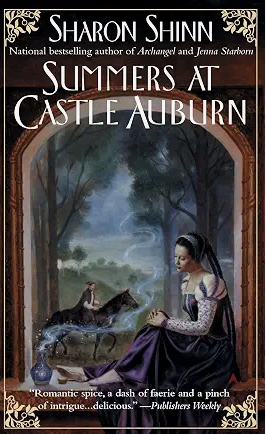
I found two quick examples that reveal what this could look like. The first comes from Summers at Castle Auburn by Sharon Shinn:
I had tied my heavy black hair back in a thick braid and dressed in boy’s clothes (a more flattering look for my slim figure than some of my court gowns, and I hoped Bryan noticed).
Readers gain a few tidbits of information in this excerpt: the protagonist has heavy black hair, she’s currently wearing it in a braid, she has a slim figure, and she’s interested in Bryan.
Here’s another example of how to weave description into action. This excerpt comes from Servant of Earth by Sarah Hawley:
As I rounded the corner of the hut, the wind grabbed at my messy braid, trying to rip the brown curls loose.
… I tore a long strip off the bottom of my shirt and wrapped the blade tightly. Then I slid the dagger inside the waistband of my trousers, strapping it to my thigh with the thin leather tie that had secured my braid. My curls sprang free, wild as ever.
Here we learn that the character has wild brown curls, and we see her using the leather tie for something practical. The detail about her wild curls doesn’t feel forced—it’s smoothly integrated into the story.
Tactic 6 - Tie the physical trait directly to the plot.
The two examples in Tactic 5 above relate to their respective plots, but the following excerpt demonstrates how a physical detail can fit so naturally into a story that it makes sense for the character to be thinking about it.
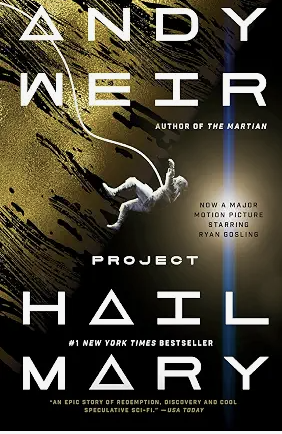
In Andy Weir’s Project Hail Mary, the protagonist wakes up to a computer talking to him, with no memory or understanding of what’s going on. He’s lying in what he believes is a hospital bed, connected to a variety of tubes. This mystery gives him every reason to examine himself:
My arms are muscular. That doesn’t make sense. I assume I’ve had some massive medical problem and been in this bed for a while. Otherwise, why would they have me hooked up to all the stuff? Shouldn’t there be muscle atrophy? … I raise my knees up. My legs are well toned too. Not bodybuilder thick, but still too healthy for someone on the verge of death.
Readers have permission to wonder along with the protagonist: where is he? Why is his body muscular when it seems like logically, he has probably been in this bed for a while? The answers are essential to the plot of the entire novel, so it’s not only natural but fully expected that the character would be pondering all this.
Tactic 7 - Show the protagonist through another character’s eyes.
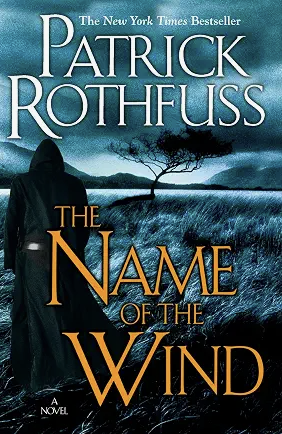
This last tactic (and remember, this is by no means an exhaustive list) only works in certain situations—but if you’re working on a story with multiple viewpoints, or if your story begins with a prologue in a different point of view, it’s a strategy to consider.
The Name of the Wind by Patrick Rothfuss opens with a one-page prologue called “A Silence of Three Parts.” It’s written from the perspective of an omniscient narrator, not from the protagonist’s point of view, so the narrator can describe the protagonist, Kvothe, directly:
The man had true-red hair, red as flame. His eyes were dark and distant, and he moved with the subtle certainty that comes from knowing many things.
Notice how Rothfuss wouldn’t write the same sentence from the deep point of view of the protagonist because that’s the whole point: Kvothe wouldn’t necessarily describe himself this way. But because of the point-of-view choice in the prologue, Rothfuss can describe Kvothe however he wishes. If you’re writing a novel from multiple points of view, ask yourself: How do other characters view my protagonist? Could they shed some light on how I want readers to see my main character?
*Note: This example differs from the Ella Enchanted excerpt in Tactic #2 because we’re in Ella’s point of view in that example, while we’re outside of Kvothe’s point of view altogether in Tactic #7.
Summing Up
Here are those seven tactics again. Refer back to this post anytime to reread the examples and see what may fit beautifully into your own story. And above all, remember that in a deep point of view, you’ll need to include a specific reason for your protagonist to be thinking about their own appearance.
Have your character compare their appearance to someone else’s.
Let another character notice or comment.
Connect description to an emotional wound.
Use imagination or metaphor to describe your character.
Attach description to physical action.
Tie the physical trait directly to the plot.
Show the protagonist through another character’s eyes.
Did the tactics above give you an idea of how to convey your protagonist’s appearance to readers in a natural way? Which example was your favorite? What other examples of authors revealing a main character’s physical description have stood out to you? Do you know of a technique I didn’t mention? Email me anytime at [email protected] and let me know!
Do you want to learn how to write a story that makes your target readers stand up and cheer? If you’d like support from A to Z (from brainstorming to drafting to revising to publication), book a Discovery Call with me to see if you’re a good fit to join my book coaching program,Fantasy Footsteps: Road to Publication. And if you haven’t done so already, grab your Free Guide on how to hook readers from your story’s start!

Capture Your Readers from Your First Scene
Get my exclusive blueprint—7 Mistakes to Avoid in Your Fantasy Novel’s Opening. Start your fantasy novel right!
Are you worried you've failed to establish a bond between readers and characters in your first chapter? Do you wonder if you've bogged readers down with your worldbuilding? Do you sometimes overlook essential conflicts? Many readers will put your book down if it doesn't grab their attention right away, so it's vital to evoke powerful emotions from readers as early as possible.
Don't let these common mistakes rob your story of its magic and momentum. Save your precious time and energy by ensuring you hook readers from the start. Grab your guide now and check your opening against these common missteps!
(You will also receive monthly writing advice, updates about my free live trainings, and direct access to replays. Unsubscribe anytime.)