Are You Ready to Write? Test Your Characters & Story Before You Draft
Discover in this post …
how to test your protagonist before drafting and give readers a character to care about.
how to shape a story that delivers on your readers’ expectations.
how to create a plan that helps you stay consistent and write 50k words in November.
Just a Normal Freak-Out
On November 1, you’re flying. Your ideas carry you through chapters 1 through 6, and you think, This is awesome! I’m doing this! Who said writing a book was hard?
Then, halfway through the month, you look up and realize you have no idea what to do with a character you forgot existed. Or you think, Is this subplot taking things in a weird direction? I like it, but it’s not what I originally planned. Should I just keep going, or will it ruin my story? How do I decide?
For so many writers aiming for 50k words during Novel November, this is a normal part of the process.

You blink a few times, and suddenly the end of the month is looming. You’re not even sure if you actually like anything you wrote. And you ask yourself, Should I feel proud that I just wrote almost 50k words? Or upset that I might end up cutting more than half of them?
Do I even have it in me to be a writer? This is HARD! What was I thinking?
Just to reassure you—this is totally normal.
When you dive in and let your momentum carry you, that might work. But without a plan, it’s easy to burn out, question yourself, or end up scrapping 30k of those 50k words.
If you have a framework and a plan, on the other hand, you’re far less likely to give up or burn out. You’ve taken the time to get to know your story and characters on a deeper level, and the inevitable question of “Is this any good?” becomes an expected part of the process rather than a surprise.
So today, we’re going to look at three core items you’ll want to think through before you begin your draft.
Some of you might have a glimmer of an idea. Others may have a full outline prepared. And some of you may be wondering whether this topic is even relevant because you’re already 40,000 words into your draft.
Here’s the good news: No matter how far you are into your story, you can always check that your foundations are solid and make adjustments if necessary. If you’re in the drafting stage—or even the revision stage—I’d encourage you to use this post as a way to diagnose whether your characters and plot are working.
Let’s look at the elements I recommend developing as early as possible to help you finish your draft and write a story that resonates.
One Quick Note Before We Dive In
Let’s be clear: As a writer, you’re your own boss. You get to decide exactly when you start drafting. So if you already know that discovering your story along the way rather than planning it works beautifully for you, don’t change what’s already working!
If, on the other hand, you’re a newer writer and you want the safest bridge from brainstorming to a finished draft—the approach least likely to leave you burned out or restarting your story twenty times—I’d lean toward using a proven strategy like the one I’m about to explain.
Let’s test three key items before you draft: your protagonist, your story, and yourself.
Test Your Protagonist
At the heart of most compelling stories is a character who wants something. Writers who not only identify what their protagonist wants but also understand the motivations behind that desire are more likely to create a main character readers truly care about.
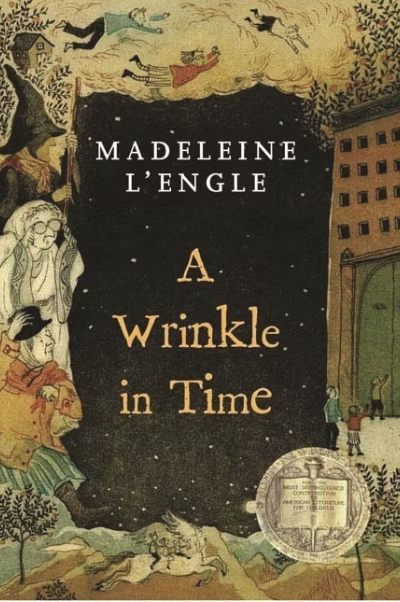
Here are the three main questions I recommend asking about your protagonist before you start drafting (or while drafting to make sure you’re on the right track). I’ve used A Wrinkle in Time by Madeleine L’Engle to provide sample answers to each question:
What does your protagonist want BEFORE the global inciting incident—and why? (The global inciting incident generally takes place ten to fifteen percent of the way through the story and sets the protagonist on a new path. It can be causal, such as an intentional attack or a character being falsely accused of a crime, or coincidental, such as someone winning the lottery or catching the plague—but either way, the protagonist’s life will never be the same.)
Example: In A Wrinkle in Time, thirteen-year-old Meg Murry wants her father to come home. She misses him and longs for her family to feel whole again. She also wants to stop feeling like an outsider.
What does your protagonist want AFTER the global inciting incident—and why?
Example: When Mrs. Whatsit reveals that the tesseract—something Meg’s father has been studying—is real, she sets in motion a series of events that lead Meg to believe she might be able to find her father. Over the next few chapters, Meg’s vague hope that he will return develops into an active goal: finding and rescuing him.
What does your protagonist NEED TO LEARN by the end of the story? In other words, how do they change internally? What’s their character arc?
Example: Meg needs to accept that the traits she sees as flaws—her anger, stubbornness, and differences—do not make her unlovable or weak. She learns to trust her capacity for love and embrace her individuality rather than wishing she could be more like everyone else.
Pro Tip: The more you understand the “why” behind your protagonist’s choices and desires, the more other elements of your story will fall into place. If you don’t understand your protagonist on a deeper level and give them only surface-level wants, readers will have a harder time connecting with them.

One of my writer clients, Suzanne, came to a coaching session with several questions about how best to portray her protagonist on the page. She knew her character was a perfectionist, and she’d done a great job showing that in Chapter 1. But when we pulled back the curtain on why the character felt the need to do everything perfectly, we discovered it was rooted in a lack of self-worth. That led us to explore the specific past experiences that had shaped those perfectionist tendencies. Once we understood the character more deeply, the answers to Suzanne’s questions became much clearer.
Another writer I work with, Sean, has a protagonist whose primary character flaw is indecision. We discussed how her inability to make strong decisions is a symptom of a deeper problem: in this case, a lack of self-trust. From there, we explored the past experiences that caused her to doubt herself, drawing Sean closer to the character he’s writing.
So remember: Character traits like indecision and perfectionism are often symptoms of an underlying problem. Don’t stop with the surface-level trait—dig deeper and uncover the reasons behind it. The better you understand your protagonist, the stronger your story will be.
Test Your Story
What kind of story are you writing? You’ll want to know this to satisfy your readers’ expectations. A reader who’s expecting a thriller, for example, won’t be happy with a slow-paced love story. In this earlier blog post, I’ve gone over nine different overarching categories of stories, along with the difference between the terms “commercial genre” (the bookstore section where readers would expect to find your book) and “content genre” (the type of story you’re telling—and the genre-specific events readers expect from that type of story).
I recommend you ask yourself the following questions as you test the strength of your story itself:
What’s the main question my story will ask and answer? (This will usually be introduced or hinted at in your global inciting incident. Examples include the following:
Will the hero prevail over the villain? (This tells you you’re writing an action-based story.)
Will the characters fall in love? (Clearly, this is a love story.)
Will the characters discover and catch the murderer? (This is a crime story.)
Will the protagonist develop the skill they need to win the competition? (This type of story revolves around performance.)
Once you know the type of story you’re writing, go one step further and ask: What are the key moments in my story that will satisfy readers?
In A Wrinkle in Time, what if Meg Murry stopped thinking about saving her father and ultimately started focusing on a romance with her friend, Calvin O’Keefe? What if in the end, she didn’t face a force of evil but instead got together with Calvin as the climax of the book? Readers would be confused and disappointed because the book would no longer deliver on its initial promise.
To be clear, you may have a variety of subplots in your book, and an overarching action plot can work beautifully with a romantic subplot. But Meg Murry’s attraction to Calvin plays only a minor role in the book—it’s not the main driving force.
Each category of story I mentioned above (action, love, crime, performance, etc.) has a loose outline associated with it that can help ensure your story hits the key plot points readers subconsciously expect from that particular type of story. Rather than go into each outline in detail here, I’ve linked to each one at the end of my earlier post about those overarching categories. Here’s that post again if you need it.
The final question I recommend you answer about your story before drafting is this: What story structure am I following?

Choosing a story structure supports everything I’ve mentioned above—it helps ensure that your story hits the right notes for your ideal readers. There are so many proposed story structures that this part can become overwhelming unless you intentionally choose one to follow. I’ve also noticed that many experts seem to be saying similar things using different language, so choose one that resonates with you. (And that means you can’t really go wrong, whichever one you choose, right?) Here are a few options for you to explore:
The Hero’s Journey - A protagonist leaves their ordinary world, faces escalating trials, transforms, and returns changed.
Save the Cat! Writes a Novel by Jessica Brody - A 15-beat, genre-aware structure adapted for novels. It gives you clear milestones, such as the catalyst, midpoint, “all is lost” moment, and finale.
Three-Act Structure - Act 1 sets up the protagonist, goal, and central problem, Act 2 complicates everything, and Act 3 brings the climax and resolution.
Story Grid by Shawn Coyne - A nested, genre-based story framework. It applies the same five-part movement—inciting incident, progressive complications, crisis, climax, and resolution—to scenes, sequences, acts, and the global story, while also using genre conventions to shape the novel’s larger arc.
Personally, I love combining aspects of Shawn Coyne’s Story Grid, like the Five Commandments of Storytelling, with Jessica Brody’s version of Save the Cat.
Test Yourself
Here’s where the real power comes in—because even if you know exactly what to do, whether or not you actually do it isn’t a matter of how much you know about story structure or character development. It’s a matter of creating a plan that works well for you and developing the skills to stick with it.
Almost every writer I’ve ever worked with has temporarily lost momentum, doubted their storyline, or gotten off track somewhere between starting and finishing their draft. That’s exactly why we plan ahead: so we can navigate those obstacles with confidence and move forward despite them.
Here are three essential elements I recommend establishing before you start drafting to help you stay consistent and reach the end:
Name your compelling reasons.
Why is writing this draft nonnegotiable for you? Why isn’t it an option for the vision of your story to stay in your head? If you’re sick or need to take a mental-health day from work, you don’t quit altogether. You return when you’re able. What are your own compelling reasons to treat your writing like a job rather than a hobby? This doesn’t mean every writer has to treat writing like a job. It’s for those who want to make writing a serious priority.

The writers who are the clearest on their compelling reasons can always look back and remind themselves of why they were originally called to write this story. I’ve worked with writers who want to create worlds that are just as engaging as the ones that inspired them as children. They want to live in the worlds they imagine and share them with eager readers. Or they want to help someone else through a struggle, much as certain characters helped them when they were young. Others have imaginations that just won’t shut up. Some feel it’s their own lifeline to sanity in a noisy world. Some say it supports their mental health.
In essence, you probably write partly for yourself and partly for others—but it can help to jot down your reasons to bring them to the forefront of your consciousness.
Plan when you’re “not feeling it.”
Nobody feels like showing up to work every single day. Even if you love your job, you’ll have days when you’re not feeling well, or something happens that throws you off, or you simply wonder what you’re doing with your life and whether you’ve made the right choices that led you here.
The same goes for storytelling. You’ll have highs and lows, and the best thing you can do is anticipate them before they arrive. Planning for likely obstacles doesn’t make you negative—it makes setbacks less surprising and easier to navigate when they do come up.
So make a plan on paper. Ask yourself, What obstacles are most likely to hinder me as I write? List every item you can imagine, then respond to those obstacles one at a time. What will I do on a day when I don’t feel inspired, for example? Will I set a timer and write for just twenty minutes to see what happens? Will I go for a ten-minute walk?
Stay accountable to the goals you set.
Let’s say you’re confident your story works and you’ve thoroughly prepared yourself to meet each obstacle that might come up as you write. The final piece that will give you the best chance of finishing your draft is having a system that helps you follow through.
First, set a clear goal for yourself. Then, if you’re using a word-count goal, break down your overall word count week by week or day by day.

Let’s say you’re doing Novel November and planning to write 50k words over the course of the month. If you’re writing seven days a week, that means you’ll write about 1,667 words per day, or about 11,667 words per week. If you’re taking weekends off and writing 5 days a week, on the other hand, you’re now working with 21 days in November 2026 instead of 30. Your goal would then be to write 2,381 words per day.
Once you’re clear on how many words you’ll be writing daily or weekly, the next step is to figure out how to track those words. For example, Scrivener tracks your manuscript’s total word count and lets you set project and session targets. ProWritingAid’s Novel November dashboard can also help you track your word-count progress and daily goal.
Decide what happens if you meet your daily, weekly, and monthly goals. One of my clients was highly motivated by rewards, and she bought herself a gift whenever she reached an important milestone.
Last, who else cares besides you whether you meet your goals? If you’re the only person aware of your goals, it can be harder to keep moving forward when obstacles or excuses arise. Most writers benefit from having an accountability partner, a critique group, or a book coach as they write.
Summary Checklist
Here are all the questions and action steps in one place for you. For the full context and explanations, refer back to the sections above.
Test Your Protagonist:
What does your protagonist want BEFORE the global inciting incident—and why?
What does your protagonist want AFTER the global inciting incident—and why?
What does your protagonist NEED TO LEARN by the end of the story?
Test Your Story:
What’s the main question my story will ask and answer?
What are the key moments in my story that will satisfy readers?
What story structure am I following?
Test Yourself:
Name your compelling reasons.
Plan when you’re “not feeling it.”
Stay accountable to the goals you set.
Did today’s post give you more confidence to move forward in your writing with a plan this November? Did it help you recognize an area of growth, or confirm that you’re on the right track? Email me anytime at [email protected] and let me know!
Do you want to learn how to write a story that makes your target readers stand up and cheer? If you’d like support from A to Z (from brainstorming to drafting to revising to publication), book a Discovery Call with me to see if you’re a good fit to join my book coaching program,Fantasy Footsteps: Road to Publication. And if you haven’t done so already, grab your Free Guide on how to hook readers from your story’s start!